The Audit Trail Problem in Hospital Research Labs: What GCP Actually Requires From Your Instrument Data
ALCOA applies to clinical trial instrument data. Most hospital research labs have workflows that cannot meet it.
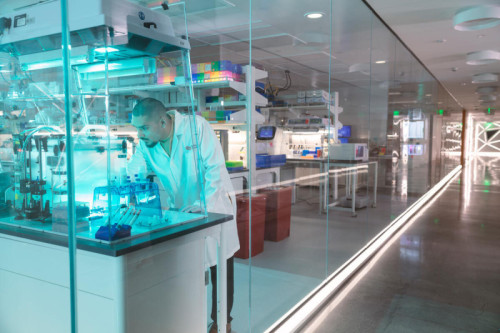
Audit trails in clinical trial data management are not a new concept. The requirement that clinical trial records be attributable, legible, contemporaneous, original, and accurate has been part of GCP guidance since long before ICH E6(R2) codified it. What has changed is how rigorously that standard is being applied — and how clearly it extends to the instrument data generated in hospital research labs.
In most hospital research lab environments, the instrument audit trail problem is not theoretical. It is a gap that exists between what GCP requires and what the current workflow can demonstrate.
What GCP Requires at the Instrument Level
ICH E6(R2) defines source data as all information in original records and certified copies of original records of clinical findings, observations, or other activities in a clinical trial. When an analytical instrument in a research lab generates a measurement relevant to a study outcome or safety assessment, that measurement is source data. It is subject to ALCOA.
What each ALCOA criterion requires from instrument data is specific:
Attributable. The record must be traceable to the person who performed the activity — and, in the context of instrument data, to the instrument that generated the measurement. A result entered into a spreadsheet by an operator is attributable to the operator. It is not, in any electronically verifiable sense, attributable to the instrument.
Legible. The record must be readable and permanent. Paper forms satisfy legibility as long as they are retained and readable. The issue is not legibility — it is the steps that follow.
Contemporaneous. The record must be created at the time the activity was performed. A result transcribed from an instrument display to a paper form minutes after the measurement was taken is arguably contemporaneous. A result entered into a study database at the end of a shift is not. The gap between measurement and documentation is an audit trail vulnerability.
Original. The record must be the first capture of the information. In a workflow where the instrument display is the first capture and the paper form is the first recorded capture, the original record exists on the instrument — and may or may not be accessible or retained.
Accurate. The record must be complete and free from transcription error. Manual transcription introduces error at a rate that has been documented across industries. In a research lab, a transcription error in a primary endpoint measurement is a data integrity event.
Where Most Hospital Research Lab Workflows Fall Short
The typical hospital research lab instrument data workflow does not fail on legibility or, usually, on accuracy in the gross sense. Where it consistently falls short is on attributability, contemporaneity, and originality — the three ALCOA criteria that depend on the record being generated at the instrument, not reconstructed after the fact.
A result that originates as a reading on an instrument display, is recorded on a paper form by an operator, and is later entered into a study database has passed through two unverifiable transcription steps before it appears in the data. The paper form is the de facto source document. The instrument output is not retained in a form that a monitor or inspector can query.
What a monitoring visit source data verification exercise reveals in this workflow: the data in the study database matches the paper form. It cannot verify that the paper form matches the instrument. That limitation is, in many monitoring contexts, a finding.
The Electronic Audit Trail Standard
ICH E6(R3) and the FDA's guidance on electronic source data in clinical investigations push toward a clearer standard: when source data is captured electronically, the electronic record should be the original. Audit trail functionality should automatically record changes. Systems should prevent unauthorized alteration.
For instrument data in hospital research labs, meeting that standard requires a different approach to how data leaves the instrument. Specifically, it requires that the instrument output be captured electronically — as close to the measurement as possible — and that the captured record carry the attribution, timestamp, and protection from modification that the electronic standard requires.
That is not achievable through a manual transcription workflow, regardless of how consistently it is executed. Consistency reduces transcription error. It does not create an electronic audit trail at the source.
What Automated Instrument Data Capture Provides
An instrument connectivity layer that captures data directly from analytical instrument output and delivers it to the study data management system addresses each ALCOA criterion at the source.
Attribution is generated at the instrument connection, capturing both the instrument identifier and the logged-in operator at the time of measurement. Contemporaneity is achieved because the record is created at the moment of measurement, not reconstructed afterward. Originality is established because the first electronic capture is the instrument output, not a transcription of it. Accuracy is protected because the path from instrument to system does not include a manual entry step.
The audit trail that results can answer the questions a monitor or inspector asks: who performed the measurement, on which instrument, at what time, and what did the instrument produce. It can answer those questions without requiring manual record reconstruction.
About Phizzle
At Phizzle, we built Connected Plant to close the audit trail gap at the instrument level — in both GMP and GCP environments. Our platform captures instrument output directly, generates a complete and unmodified electronic record at the moment of measurement, and delivers it to the system of record with full attribution and timestamp. No transcription step. No reconstruction required.
Address the Gap Before the Discovery
The GCP audit trail requirement for instrument data in hospital research labs is not ambiguous. What is ambiguous, in many institutions, is whether the current workflow can meet it. The answer to that question is discoverable — by a monitor during a site visit, by a sponsor during a data management review, or by an investigator preparing for an inspection.
Addressing the gap before that discovery is significantly less disruptive than addressing it after. If this is a challenge your team is working through, let's talk.