From the Bench to the LIMS: Why Research Hospital Labs Still Carry Data by Hand
The instrument-to-LIMS gap in hospital research labs is a persistent source of documentation risk. Here is what sustains it and what closes it.
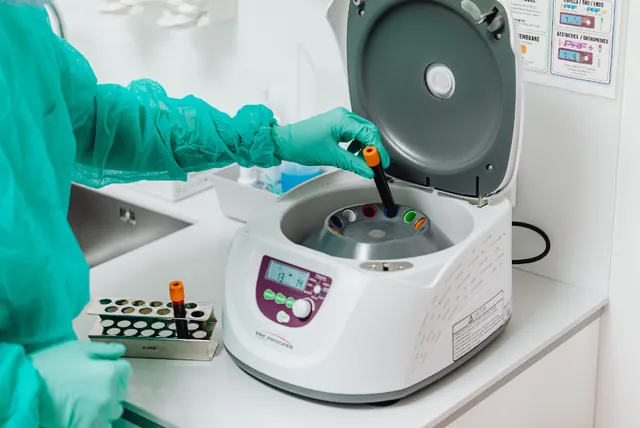
The distance from an instrument to a LIMS in a pharmaceutical manufacturing facility is, in most modern implementations, measured in milliseconds. In a hospital research lab, it is still frequently measured in hours.
That gap — between when an instrument produces a result and when that result appears in a study management system — is one of the most persistent operational and compliance vulnerabilities in clinical research. It is also one of the most accepted as simply how things work.
Understanding why the gap persists, and what actually closes it, starts with the specific characteristics of the hospital research environment.
Why the Gap Exists in Hospital Research
The instrument-to-LIMS gap in hospital research is not the result of a single decision or a single failure point. It is the product of an operating environment that was not designed for automated instrument data management — and that has not yet been systematically redesigned.
Research lab instrument environments in academic medical centers are assembled across time and funding sources. Instruments from different manufacturers, acquired in different periods, serve research programs that have different data management requirements. No single integration approach addresses all of them, and the IT resources required to build and maintain custom integrations across a heterogeneous instrument environment are not typically available to hospital research departments.
The result is a de facto standard: instrument data leaves the instrument through the operator. The operator reads the result, records it on a paper form or enters it into a spreadsheet, and the research coordinator or data manager eventually transfers it to the study database. The LIMS or EDC system contains a record of what was entered — not a record of what was measured.
The Documentation Chain This Creates
The documentation chain that manual instrument data handling creates has a specific structure and specific vulnerabilities.
The original record, in most manual workflows, is the paper form or the spreadsheet entry — not the instrument output. The instrument output may be printed on a results tape, stored in instrument memory, or displayed on a screen that no one has retained. When a sponsor monitor asks to verify a study data point against the source document, the source document is the paper form. What the paper form cannot demonstrate is whether it accurately reflects what the instrument measured.
That limitation is acceptable in a world where GCP source data verification focuses primarily on consistency between CRF and source document. It is less acceptable in an environment where the FDA's data integrity guidance has established that electronic source data should include audit trail functionality and where ICH E6(R3) has emphasized the quality of electronic systems supporting clinical trial data.
The gap between paper source document and instrument output is a GCP audit trail gap. It exists in the majority of hospital research labs that are running active clinical trials.
The Specific Risk Points
Three specific risk points in the manual instrument-to-LIMS workflow are most likely to create compliance exposure:
Transcription error. A result transcribed from an instrument display to a paper form and then from a paper form to a study database has passed through two unverifiable modification points. The error rate in manual transcription is well-documented across industries. In a research context, a single transcription error in a primary endpoint data point can trigger a query, a correction process, and potentially a protocol deviation investigation.
Delayed entry. Results that are not entered into the study database contemporaneously — at the time of measurement — create a documentation timing gap that monitors and auditors may flag. An entry timestamped hours or days after the instrument run was completed cannot be demonstrated to be contemporaneous.
Incomplete records. Paper forms that are lost, partially completed, or retained in an unstandardized manner cannot be consistently produced during monitoring visits or audits. A research site that cannot produce the source document for every data point in the CRF is in a difficult position regardless of how accurately the data was originally recorded.
What Automated Instrument Data Capture Provides in Research Settings
The solution to the instrument-to-LIMS gap in hospital research does not require replacing the instrument fleet. It requires a connectivity layer that sits between existing instruments and study data management systems — capturing data at the source and delivering it to the receiving system without a manual step.
In a connected research lab workflow, the path from instrument to LIMS is direct. The instrument produces a result. The connectivity layer captures it, formats it per the data specifications of the receiving system, attaches the required metadata (instrument ID, operator ID, timestamp, sample identifier), and delivers it to the study database. The record in the LIMS is grounded in the instrument output. The audit trail traces from the study database back to the moment of measurement.
For GCP compliance, this changes the source data documentation picture in specific ways. The contemporaneity requirement is met because the record is created at the time of measurement. The attribution requirement is met because the instrument and operator identification is captured automatically. The originality requirement is met because the first electronic capture of the result is the instrument output, not a transcription of it.
For research operations, the change is equally significant. Data entry time is eliminated. Transcription errors are removed from the workflow. Results are available in the study database in real time, which means data queries can be resolved quickly rather than requiring manual record reconstruction weeks after the fact.
About Phizzle
At Phizzle, we built Connected Plant to close the instrument-to-LIMS gap in both pharmaceutical manufacturing and clinical research environments. Our platform captures data directly from multi-vendor instrument fleets, delivers it to study management systems with full audit trail documentation, and does so without requiring instrument replacement or dedicated informatics teams to maintain.
The Gap Persists Because It Is Familiar
Hospital research labs are carrying data by hand because the infrastructure to do otherwise has not been a standard part of the research informatics investment. That is changing — not because of a technology change, but because of a regulatory and sponsor expectations change that is making the gap increasingly difficult to defend.
The connectivity infrastructure that closes it exists, is deployable within the resource constraints of a research hospital environment, and does not require replacing the instruments that research programs depend on. The gap persists because it is familiar. Closing it is more straightforward than most research departments assume. If this is a challenge your team is working through, let's talk.